
Buying Vintage Guitars: Online or In Person?
A vintage guitar can look like the right one in a photograph and still turn out to be a costly disappointment when it arrives at your door. That’s why Buying Vintage Guitars Online vs In Person matters so much to serious players and collectors alike: the right choice is not just about finding a rare instrument, but about judging authenticity, condition, originality and value with confidence.
For buyers searching for a specific make, model, year, finish or component, whether that’s a pre-CBS Fender, a particular Gibson Les Paul colour, or a hard-to-find piece of gear, the buying journey can look very different depending on where you live. If you’re in Sydney, visiting a curated showroom gives you the chance to inspect the guitar up close, feel its weight and resonance, and compare it against other exceptional instruments. If you’re elsewhere in Australia or overseas, a trusted online purchase can still be the right move, provided the seller is transparent and experienced.
In practical terms, it is about understanding how to protect yourself from hidden repairs, swapped parts, exaggerated descriptions and condition issues that are easy to miss in a listing. In this article, we’ll look at the advantages and drawbacks of each approach, the questions worth asking before you commit, and the checks that help you buy with greater certainty.
At Premier Guitars , we spend our days helping musicians and collectors navigate exactly these decisions with honest appraisals, fair pricing and a genuinely personal approach. If you’d like to explore our Vintage Guitar Shop Sydney page or need help finding the right instrument, get in touch via our contact page, we’re always happy to help you make an informed choice.
Online vs In-Person Vintage Guitar Buying: A Guide to Safer Purchases
When buying a vintage guitar, knowing What to Check Beyond Tone and Appearance can help you look past a polished finish and recognise potential issues that may affect its value and playability. A guitar can look immaculate in photos yet hide repairs, replaced parts, neck issues, or originality concerns that only become obvious when you hold it, play it, and inspect it properly. Think of it like buying a classic car: the paint may shine online, but the real story lies in the engine, the structure, and the paperwork.
Buying online can give you access to a wider selection, especially if you are searching for a specific Fender, Gibson, Martin, Gretsch, or a particular year, finish, pickup set, or condition level. It is often the best option for buyers outside Sydney who want first access to rare stock and are happy to have the guitar shipped. However, the main risk is relying too heavily on images and descriptions alone.
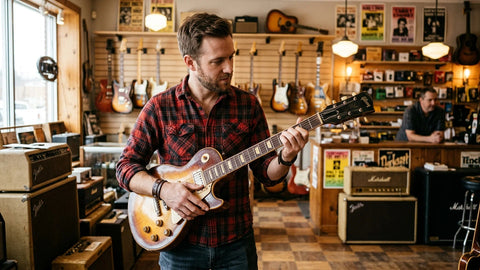
Buying in person gives you something that no listing can fully replace: direct experience. You can feel the neck profile, hear the resonance, test the electronics, and compare instruments side by side. That is especially valuable when you are choosing between two similar vintage guitars that differ in tone, wear, or originality. At Premier Guitars, our curated showroom in northern Sydney lets you do exactly that, with the added confidence of speaking to people who understand the instrument’s history and character. If you are planning a visit, our Vintage Guitar Shop Sydney page is a great place to start.
The key distinction is that neither approach is automatically safer; the safer choice is the one backed by proper information, honest appraisal, and a trusted seller. A common misconception is that online buying is always risky and in-person buying is always foolproof. In reality, both can be excellent when the guitar is accurately represented, carefully inspected, and supported by clear communication. At Premier Guitars, we help reduce that risk by offering honest assessments, fair pricing, secure handling, climate-controlled storage, and a professional buying experience for collectors and players alike, whether you are shopping locally in Sydney or arranging delivery elsewhere in Australia or worldwide.
Vintage Guitar Buying Terms Worth Knowing

Understanding these basics helps you judge condition, originality and value with far more confidence.
Originality
Originality refers to how much of the guitar is still as it left the factory, including its body, neck, pickups, tuners and finish. A highly original instrument is often more desirable to collectors because it tends to retain more of its historical character and value.
Provenance
Provenance is the documented history of an instrument, such as previous owners, repair records, sales receipts and any notable background. Strong provenance can help confirm authenticity and add to a guitar’s appeal.
Refret
A refret is the replacement of a guitar’s frets, usually because the originals have worn down over years of playing. It is a common maintenance job on vintage instruments and does not automatically reduce value, but the quality of the work matters.
All-original
All-original describes an instrument that still has its factory-installed parts and finish, with no significant changes or replacements. In practice, very few vintage guitars are truly all-original, so the term should always be checked carefully.
Player grade
Player grade is used for a vintage guitar that shows wear, repairs or replaced parts, but remains a strong, usable instrument. These guitars are often bought for their sound, feel and musical value rather than for pristine collectability.
Case candy
Case candy refers to the original accessories that came with the guitar, such as warranty cards, manuals, tags, straps, tremolo arms or other paperwork and items. These extras can add to the completeness and appeal of a vintage package.
Set-up
A set-up is the adjustment of a guitar to improve its playability, including neck relief, action, intonation and sometimes pickup height. A proper set-up can transform how a vintage guitar feels without altering its character. Relevance: This is particularly important when buying in person, because you can immediately feel whether the instrument is comfortable and responsive. If you are buying online, asking about the current set-up helps you judge whether the guitar will suit your playing style straight away or need attention after delivery.
Once you understand these terms, it becomes much easier to compare guitars honestly, spot value and avoid costly assumptions. That is exactly the kind of confidence we want you to have when choosing a vintage instrument, whether you are visiting us in Sydney or buying from further afield.
FAQs on Buying Vintage Guitars Online vs In Person
If you’re weighing up Buying Vintage Guitars Online vs In Person: How to Reduce the Risk of an Expensive Mistake, it’s natural to have a few concerns before you commit. Below, we answer the most common questions to help you buy with more confidence and fewer surprises.
Is it safer to buy a vintage guitar in person than online?
Buying in person usually gives you the best chance to assess a guitar properly, because you can check the feel, playability, weight, neck angle, fret wear, and any signs of repair work for yourself. That said, buying online can still be safe if the seller provides detailed photos, honest descriptions, clear return terms, and, ideally, a video demo or independent inspection. The safest approach is to combine careful research with a trusted seller who is transparent about the instrument’s history and condition.
What should I check before buying a vintage guitar online?
Start with the basics: confirm the make, model, serial number, modifications, and originality of key parts such as pickups, tuners, bridge, and finish. Ask for close-up images of the headstock, neck joint, control cavity, and any repairs or damage, and request a sound demo if possible. If you’re unsure, it’s worth arranging a professional appraisal or speaking to a specialist like Premier Guitars before you buy.
How can I tell if a vintage guitar has been over-restored?
An over-restored guitar may look cosmetically impressive but lose value if too many original features have been replaced or refinished. Look for signs such as a heavily sanded neck, mismatched hardware, non-original finish work, or parts that do not match the instrument’s age. A good vintage guitar should show its character honestly, and the best sellers will be open about what has been changed and why.
What are the biggest risks of buying a vintage guitar without seeing it first?
The main risks are hidden damage, undisclosed repairs, incorrect originality claims, and a guitar that simply doesn’t sound or feel as expected. Photos can miss issues such as neck instability, electrical faults, or a body crack that affects long-term value. If you are buying remotely, insist on full disclosure, secure payment methods, and a seller with a proven reputation for honest appraisals and fair dealing.
How do I reduce the risk of paying too much for a vintage guitar?
Compare recent sales of similar instruments, not just asking prices, so you get a realistic idea of market value. Factor in originality, condition, provenance, and any restoration work, as these can make a major difference to price. If you’re uncertain, ask for an independent valuation or work with a trusted dealer who can explain why a guitar is priced the way it is.
When is it better to buy vintage guitars in person?
Buying in person is especially valuable when you want to judge tone, resonance, neck profile, and overall feel, or when the instrument is high-value and originality matters a great deal. It is also the better choice if you’re still learning what to look for, because you can ask questions and compare guitars side by side. At our northern Sydney showroom, you can try instruments properly and make a more informed decision before you buy.
Can a specialist dealer help me avoid an expensive mistake?
Yes, a reputable specialist dealer can save you time, reduce uncertainty, and help you avoid costly errors. At Premier Guitars, we carefully assess each instrument, provide honest appraisals, and create a secure, professional buying environment so you know exactly what you are considering. Whether you buy online or in person, that level of transparency can make all the difference when you’re choosing a vintage guitar.
The right vintage guitar should inspire confidence as well as excitement. Whether you’re buying online or in person, these FAQs show that careful checking, honest information, and expert guidance are the best ways to protect your investment.
Making a Confident Vintage Guitar Purchase
Whether you choose to buy online or in person, the safest approach is the one that gives you the clearest picture of the instrument, its condition, and its history. As we’ve explored, Buying Vintage Guitars Online vs In Person: How to Reduce the Risk of an Expensive Mistake comes down to careful research, asking the right questions, and knowing when to walk away. A great vintage guitar should inspire confidence before it ever reaches your hands.
If you’re comparing listings from afar, detailed photos, accurate descriptions, return policies, and seller reputation all matter. If you’re buying face to face, playability, originality, and a proper inspection become just as important. Either way, the goal is the same: to protect your budget and make sure the guitar you choose is genuinely the right one for you.
At Premier Guitars, we understand how much care goes into choosing a vintage instrument. With honest appraisals, a carefully curated showroom, and a secure, professional buying environment, we help you reduce risk and buy with confidence. If you’d like expert advice or want help finding the right guitar, please contact us, we’re here to help you make a well-informed decision.
Visit our Vintage Guitar Shop Sydney page to explore Premier Guitars’ selection of vintage instruments and find a guitar that offers lasting enjoyment and value. Our experience and practical guidance can help you make a more informed purchasing decision.